
Published on January 30, 2026 by

User-generated content (UGC) ads enhance a brand’s customer journey by fostering authenticity and trust.
When potential customers see real people using and endorsing a product, it creates a sense of credibility that influences their purchasing decisions.
UGC encourages community engagement, leading to a deeper emotional connection between the brand and its customers.
Additionally, these ads can provide valuable insights into customer preferences and behaviors, informing marketing strategies.
By incorporating UGC into campaigns, brands can improve customer experience and satisfaction throughout the buying process.
In the end, leveraging UGC not only boosts brand visibility but also cultivates loyalty and repeat business.
There is more to explore on how UGC ads can significantly enhance the customer journey beyond the key takeaways already mentioned.
In the following sections, I will discuss how different platforms effectively incorporate UGC and the importance of knowing your target audience to maximize engagement.
Additionally, I will cover strategies to inspire customers to create content and the impact of UGC on brand loyalty and retention.
Understanding these elements will provide a more comprehensive view of how UGC can be a powerful tool for any brand.
When we think about the online world, it’s hard to ignore the sheer power of user-generated content, often referred to as UGC.
It symbolizes a shift in how consumers engage with products and brands, leading to genuine connections.
UGC consists of any form of content created by users rather than brands themselves.

This can include photos, videos, reviews, and even blog posts that highlight personal experiences.
At its core, UGC represents the voices of real people.
Unlike polished marketing materials, this content brings a much more authentic view that potential customers can relate to.
I would say it’s like walking into a cozy café, where the chatter of satisfied customers fills the air.
It feels inviting and real, as opposed to being in a sterile showroom.
When brands incorporate UGC, they are essentially allowing their customers to become brand ambassadors.
The trust built through real user experiences resonates more than any scripted ad could ever hope to achieve.
Consider the various types of UGC that can enhance a brand’s image and user engagement:
Let’s talk more about why UGC is so impactful in today’s marketing landscape.
Essentially, it comes down to the fact that people are more influenced by what their peers say than by what brands project.
Imagine scrolling through your social media feed and seeing a friend’s post about a new product they just bought.
You trust their opinion because it feels like an honest interaction rather than a marketing tactic.
This trust is the foundation of UGC.
It is that connection that embodies a palpable sense of community, giving potential customers reassurance and a feeling of belonging.
Moreover, UGC serves as a powerful tool to enhance engagement.
When brands actively promote content from their users, they foster a sense of loyalty and appreciation, which customers value greatly.
Every shared photo or rave review acts like positive word-of-mouth, amplifying its reach far beyond what traditional ads can achieve.
In this sense, UGC acts as a bridge between customers and brands, fostering relationships on a more personal level.
Another point worth mentioning is the evolution of consumer behavior in the digital age.
As online shopping becomes increasingly prevalent, people seek genuine connections before making purchases.
In reality, buyers often embark on profound research journeys, regularly consulting peer-generated content.
They feel empowered when they see real people endorsing products, and they naturally gravitate toward brands that encourage this kind of engagement.
Brands that successfully leverage UGC maximize their customer experience.
Integrating authentic stories not only enriches storytelling but also fosters brand loyalty while establishing credibility in a crowded marketplace.
In essence, UGC transforms marketing strategies from mere promotional activities into dynamic conversations.
It allows brands to listen, learn, and evolve based on the feedback from their customers.
When individuals share their experiences online, they provide invaluable insights that brands can utilize to refine their offerings.
The ripple effect of a single positive review can propel a brand into newfound success.
It’s evident that UGC fosters authenticity and bolsters a brand’s reputation.
When brands showcase the creations of their consumers, they humanize their marketing approach and facilitate deeper engagement.
Furthermore, the creative potential of UGC is virtually limitless.
Users everywhere are telling their stories, and brands have the opportunity to tap into this vast reservoir of content.
Pro Tip: Incorporating user-generated content (UGC) into your marketing strategy allows brands to foster authentic connections with potential customers, significantly enhancing customer trust and engagement by showcasing real experiences over polished advertisements.
In the end, successful brands utilize UGC to create connections that traditional advertising methods cannot replicate.
The richness of real human experiences provides a genuine opportunity for brands to engage their audience meaningfully.
User-generated content (UGC) plays a crucial role in establishing trust between brands and their customers.
It essentially turns the spotlight onto real people who share their genuine experiences with a product or service, creating a powerful narrative that resonates.
One compelling aspect of UGC is its authenticity; people tend to trust the opinions and reviews of their peers more than flashy advertisements.

It’s kind of like asking a friend for advice; you value their honesty over any sales pitch.
When customers showcase how they use a product in their daily lives, it provides prospective buyers with a realistic glimpse into the product’s capabilities.
This relatability can bridge a significant gap between the brand’s presentation and the actual experience.
Moreover, UGC often reflects a variety of perspectives that traditional marketing simply cannot capture.
For instance, seeing a product in action,a user demonstrating its features,offers insights that polished commercials may overlook.
Another noteworthy point is that UGC builds a community around the brand, which in turn reinforces trust.
When consumers share their experiences and see others doing the same, it fosters a sense of belonging.
This community aspect is more than just a marketing strategy; it’s a natural response to a shared experience, making customers feel valued and understood.
The more a company cultivates this community feeling, the stronger the trust can become.
Social media platforms have become a thriving ground for UGC, where users easily share their thoughts.
Whenever a customer takes the time to post a picture or comment about their experience, it signifies an investment in the brand.
Furthermore, the engagement found in UGC often encourages potential customers to look deeper into what a brand stands for.
This engagement can involve liking, sharing, or commenting, which all contribute to building a positive perception of the brand.
When potential buyers see that others have enjoyed the product, they feel more inclined to explore it themselves.
In a way, this kind of organic marketing creates a ripple effect; one customer’s enthusiasm can spark interest in countless others.
Additionally, UGC can humanize the brand by showcasing the real people behind it.
Customers tend to appreciate brands that show their personality rather than just pushing a sales agenda.
This transparency can be incredibly effective because it allows consumers to see the human side of the brand.
When customers feel connected to the faces and stories behind a company, their loyalty grows stronger.
Also, it’s important to note the role of positive emotions in building trust.
Emotionally charged content,like stories of how a product changed someone’s life,tends to stick in people’s minds.
Stories create a mental image, allowing potential customers to envision themselves experiencing the same joy.
When a brand’s offerings become linked with personal triumphs or everyday victories, it elevates trust to another level.
Leveraging UGC can also help dilute any negative feedback a brand may receive.
When positive experiences are actively shared and celebrated, they can overshadow the occasional negative review.
Moreover, featuring UGC prominently, such as on a brand’s website or social media pages, can serve as a comprehensive testimonial.
This showcasing transforms casual buyers into enthusiastic advocates for the brand.
Another fascinating aspect is that UGC gives brands the chance to engage directly with their customers.
Responding to a customer post with a thank you or resharing their content humanizes the brand.
This kind of interaction is invaluable and can elevate a customer’s perception of a brand’s responsiveness and care.
In the end, it shows that the brand is not just about sales but also about building relationships.
One could compare UGC to a warm hug on a cold day; it provides comfort and a sense of safety in making a purchasing decision.
This comfort comes from knowing many others have walked the same path with positive results.
On platforms like Videnly, the use of user-generated content can be further streamlined with features that facilitate the creation of engaging videos.
By harnessing this technology, brands can showcase authentic testimonials in a manner that feels both modern and relatable.
Moreover, allowing customers to share their creators’ stories easily can turn everyday interactions into powerful marketing tools.
The outcome is not just effective advertising but a means to build and cultivate trust over time.
In industries where competition is fierce, trust can be the deciding factor that tips the scale in favor of one brand over another.
When brands create environments where UGC flourishes, they tend to see enhanced customer loyalty.
In short, trust is essentially earned through consistent and genuine engagement.
It’s often the stories and experiences shared by users themselves that lay down the foundation for this essential element in the customer journey.
In today’s world, the concept of authenticity holds significant weight, particularly in the realm of marketing.
Customers increasingly favor brands that resonate with their own values and beliefs, which creates a strong demand for transparency and genuine engagement.
Everywhere you look, consumers are bombarded with advertisements that tout all sorts of fantastic promises and benefits.

Yet, the market is savvy, intimately aware that many of these claims can be exaggerated or misleading.
When brands present themselves as imperfect and real, it creates a powerful connection where customers feel understood.
This connection isn’t merely transactional; it’s a relationship built on trust.
We live in an age where social media is bursting with curated images and perfect lifestyles.
Consequently, when consumers are exposed to authentic portrayals of products or services, they feel a sense of relief and trust.
Think about it: when you see a peer using a product or sharing an experience, it resonates more than a polished advertisement.
It feels less like marketing and more like a genuine recommendation from a friend.
This leads to an important realization about User-Generated Content (UGC).
It is often raw and unfiltered, offering a unique perspective that can significantly enhance a brand’s image.
Additionally, authenticity in marketing creates a sense of community among consumers.
It’s not just about selling a product anymore; it’s about sharing a journey and building connections that intertwine with a brand’s values and mission.
Here are some reasons why authenticity matters in marketing, particularly in the context of UGC:
When brands share the human side of their story, it allows customers to see beyond just the product.
They actually get to know the people behind the company, which further deepens that trust.
As a result, customers not only feel connected to the products but also those who create them.
This connection can transform a simple purchase into a meaningful experience that stays with them long after the transaction.
Moreover, in a marketplace overflowing with choices, authenticity can be the differentiating factor.
It’s similar to navigating through a dense forest; true authenticity leads customers down a clearer, more trustworthy path amidst the chaos.
Another element to consider is how authenticity impacts a brand’s reputation.
When a brand becomes known for its genuine approach, it attracts not just new customers, but also brand advocates.
These advocates are incredibly valuable; they share their positive experiences and amplify brand messages within their networks, ultimately drawing in a wider audience.
It’s like adding fuel to a fire, intensifying interest and engagement around the brand.
It’s essential for brands to remember that consumers today are not just looking for products; they seek experiences.
Experiences that feel real and relatable are far more appealing than those that seem staged or insincere.
Consequently, brands should embrace the power of storytelling pulled from real experiences.
Telling the story of a product’s journey, for example, reveals its inherent purpose and values.
This authenticity is further amplified when brands utilize content created by their customers.
Each customer story represents a unique perspective, contributing to a richer narrative that can be more powerful than any polished ad might convey.
Pro Tip: Authenticity in marketing is essential because it builds trust and fosters genuine connections between brands and consumers, making customers more likely to choose, engage with, and remain loyal to a brand that resonates with their values.
At the end of the day, when brands commit to authentic marketing, they are not just creating campaigns; they are laying the foundation for lasting relationships with their customers.
In a crowded marketplace, being genuine often becomes your most effective strategy for standing out.
When we talk about User Generated Content or UGC, it’s essential to recognize that not all content is created equal.
Quality UGC can significantly enhance your brand’s image while allowing customers to engage more deeply with your products.
First and foremost, authenticity plays a crucial role in determining the quality of UGC.

Consumers are more inclined to trust content that appears real and relatable rather than overly polished marketing material.
Look for content that captures genuine moments rather than staged environments.
When a customer shows enthusiasm while using your product, that raw emotion resonates with potential buyers, creating a more compelling argument for your brand.
Next, assess the creativity of the UGC.
Unique and engaging content can capture attention quickly, grabbing the viewer’s interest and prompting them to explore more about your brand.
The creative flair demonstrates that the user is not just sharing their experience but expressing their identity through your product.
Whether through a humorous video or a beautifully composed photo, creativity can make UGC stand out as an artistically intriguing piece among the plethora of content online.
It’s those innovative takes on your product that can spark conversations and engagement.
Another important aspect to consider is the emotional connection the content evokes.
Content that resonates emotionally can create a bond between the consumer and your brand that lasts well beyond a single purchase.
That sense of connection often compels both existing customers and potential customers to share their own experiences, creating a ripple effect that benefits your brand exponentially.
Quality does not only lie in visuals but also in the narrative that comes with the content.
A well-told story can turn a simple review into an inspiring tale that captivates audiences.
Users who can narrate their journey with your product often lend stronger credibility to their experience.
Then, consider the engagement metrics associated with the UGC.
High engagement levels, such as likes, shares, and comments, indicate that the content resonates with a broader audience.
It’s one thing for someone to create a beautiful piece of content, but if it doesn’t engage others, it might not serve your brand effectively.
Moreover, examine the ethical considerations of the content being shared.
It’s important that the UGC aligns with your brand values and promotes a positive message.
Content that attributes to negativity or evokes inappropriate themes might not only harm your brand reputation but also alienate potential customers.
Quality UGC is often enhanced through diversity in content creators.
When you see a range of demographics and backgrounds among content creators, it broadens the narrative surrounding your brand.
This variety not only showcases your product’s versatility but also enables different customers to find relatable experiences they can connect with.
Another point to ponder is the technical quality of the UGC itself.
While authenticity trumps perfection, content that is too blurry or ill-lit can be off-putting.
It’s about finding that sweet spot between rawness and quality that fulfills audience expectations.
Additionally, the context in which the UGC is shared plays a significant role in its effectiveness.
A post shared during a significant event or holiday often gains more traction than one shared casually.
Timing your UGC promotion can mean the difference between it being overlooked or celebrated.
Consistency in theme is also essential in UGC identification.
If users consistently feature your product in certain situations, it creates a recurring narrative around your brand that resonates deeply.
Think of this as crafting a compelling tale told from multiple perspectives; each contribution adds richness to the overall narrative.
Building a more profound relationship with your audience will often yield better UGC over time.
When consumers feel valued and connected to your brand, they are more likely to create and share quality content, turning them into not just customers but brand ambassadors.
In evaluating UGC, remember to foster interaction with the content creators themselves.
Engaging with users can encourage them to produce even more high-quality submissions.
When they feel their content is appreciated, they’re likely to pour their best efforts into it.
Lastly, create a feedback loop within your brand that promotes and nurtures quality UGC.
Setting guidelines that help creators understand what you’re seeking can enhance their contributions.
This doesn’t mean stifling creativity; rather, it’s about guiding it in a way that aligns with your brand’s vision while still letting individuality shine through.
Choosing the right platforms for user-generated content is essential, as each offers distinct advantages that can enhance your brand’s visibility and engagement levels.
A little like choosing the right stage for a concert, the platform can make all the difference in how your performance resonates with the audience.
One of the most powerful platforms for UGC is Instagram.

The visual nature of Instagram allows brands to showcase unique customer experiences through stunning photos and short videos, making it incredibly engaging for users and brands alike.
Brands often find that utilizing Instagram Stories can be particularly useful for featuring UGC.
The ephemeral nature of Stories encourages quick engagement, and users often feel inspired to share their experiences with products in real time.
Another excellent platform for UGC promotion is Facebook, where users share their experiences, and brands can create groups focused on community interaction.
The platform’s robust features allow customers to post reviews, photos, and videos, helping to foster a sense of community around a brand.
YouTube stands out in the UGC landscape as a hub for longer-form content that dives deep into brand experiences.
Viewers often turn to YouTube to explore comprehensive reviews and tutorials, providing an opportunity for brands to showcase genuine user experiences in an engaging format.
The dominance of TikTok cannot be overstated, especially for brands aiming to reach a younger audience.
The platform thrives on creative, short-form videos that often go viral, making it an ideal space for brands to encourage UGC through challenges and trends.
When it comes to fostering UGC, Twitter serves as an engaging tool where brands can capitalize on customer feedback and conversations.
Users are likely to share their experiences and thoughts, which can be circulated widely through retweets, amplifying brand engagement.
Several aspects make a platform suitable for UGC, so it is helpful to organize these considerations.
Here are key elements to keep in mind when assessing platforms for UGC:
LinkedIn may not be the first place that comes to mind when discussing UGC, but it’s an underrated platform for brands focused on B2B marketing.
Professionals often share insights related to their use of a product or service, thereby enhancing with authentic content tailored for a business audience.
Additionally, platforms like Pinterest function as visual discovery tools, perfect for showcasing great user-generated content that inspires potential customers.
Users often turn to Pinterest for inspiration, making it a strong platform for brands that focus on lifestyle and creativity.
Don’t overlook forums and niche communities found on platforms such as Reddit or even specialized groups on Facebook.
These spaces foster rich discussions and can be gold mines for brands looking to gather authentic user insights and stories.
Pro Tip: Choosing the right platforms for user-generated content is essential, as each offers distinct advantages that can enhance your brand’s visibility and engagement levels.
In creating a successful UGC strategy, brands should consider their overall goals and the specific characteristics of these platforms.
It’s about finding the right mix to ensure that customer experiences are highlighted in a way that resonates with the wider audience.
When considering how to boost customer engagement, one starts to realize the significant impact of authentic interactions.
Think of customer engagement as a vibrant conversation where both parties bring their unique perspectives.
To create a dynamic environment, businesses should actively invite participants to share their experiences.

This could mean asking customers to post reviews or photos featuring their favorite products.
One powerful method to attract engagement is implementing a dedicated hashtag for your brand.
Customers enjoy being part of a community, and a hashtag can serve as a digital meeting place.
Sharing unique content that resonates with your audience can really set your brand apart.
These moments become the building blocks for lasting relationships, much like creating a scrapbook of shared memories.
Encouraging customers to create user-generated content can also amplify engagement significantly.
When they see others contributing, it fosters a sense of belonging and stimulates them to join in.
Organizing contests or giveaways centered around this aspect can be effective.
A little friendly competition may just be the spark that ignites interest, inviting customers to showcase their creativity.
Businesses can incentivize participation by offering rewards such as discounts or recognition.
This not only motivates customers but also drives them to engage with your brand more actively.
It’s essential to maintain a consistent online presence that resonates with your audience.
Regularly updating and engaging through social media or email ensures that customers stay connected and involved.
Responding to customer inputs is incredibly important as well.
Acknowledging their comments, whether positive or negative, shows that their voices truly matter.
Moreover, featuring user-generated content on your official channels proves to be a game-changer.
It validates customer contributions, making them feel seen and appreciated.
People love storytelling, and sharing customers’ experiences can create an emotional connection.
These testimonials can serve as powerful narratives, inviting potential customers to see the real-life value of a brand.
Another avenue to explore is collaborations with influencers who resonate with your target audience.
An influencer’s endorsement can make your brand feel more relatable and trustworthy.
Allowing influencers to curate their content using your products can showcase their authentic experiences.
This fosters a genuine connection that your audience is likely to trust and engage with.
Creating interactive content such as polls or quizzes is another great method to engage customers.
Not only is it entertaining, but it provides valuable insights into customer preferences and interests.
With the rise of short-form video content, encouraging customers to share their stories through platforms like TikTok or Instagram Reels can be incredibly powerful.
These moments allow their creativity to shine, while also promoting your brand.
To further deepen engagement, host regular events such as webinars or live Q&A sessions.
These initiatives create opportunities for real-time interaction and strengthen the bond between the brand and its customers.
It’s essential to establish a consistent tone and personality across all platforms.
When customers identify with the brand’s voice, they are more likely to engage and want to participate.
Sometimes, it takes a bit of experimentation to discover what resonates most with your audience.
Staying adaptable and open to feedback can lead to innovative ways to spark engagement.
At the end of the day, making your customers feel engaged requires a blend of innovation and empathy.
When they see their contributions valued, the entire customer journey transforms into a collaborative experience.
One approach is leveraging seasonal themes or events in your campaigns to create timely content.
This adds relevance and encourages customers to interact with your brand in unique, timely ways.
Lastly, sharing behind-the-scenes glimpses of your business can humanize your brand.
It invites customers into your world, fostering a connection that feels personal and genuine.
Engagement is ultimately about forging connections, creating focus on the people in your community.
By facilitating genuine interactions, brands are not just marketing a product, they are nurturing relationships that matter.
When customers truly feel that they are part of something bigger, their loyalty often deepens.
Encouraging meaningful interactions can pave the way for a more dedicated customer base that values and supports your brand.
This entire process can be likened to planting seeds in a garden.
With attention, care, and the right nurturing, those seeds can blossom into a thriving community that is engaged and loyal.
User-generated content (UGC) ads represent a genuinely engaging way to harness the creative power of your audience.
When brands encourage their consumers to share experiences, they tap into a rich vein of authenticity that resonates deeply with potential customers.
One significant benefit of UGC ads is that they build a stronger sense of community around your brand.
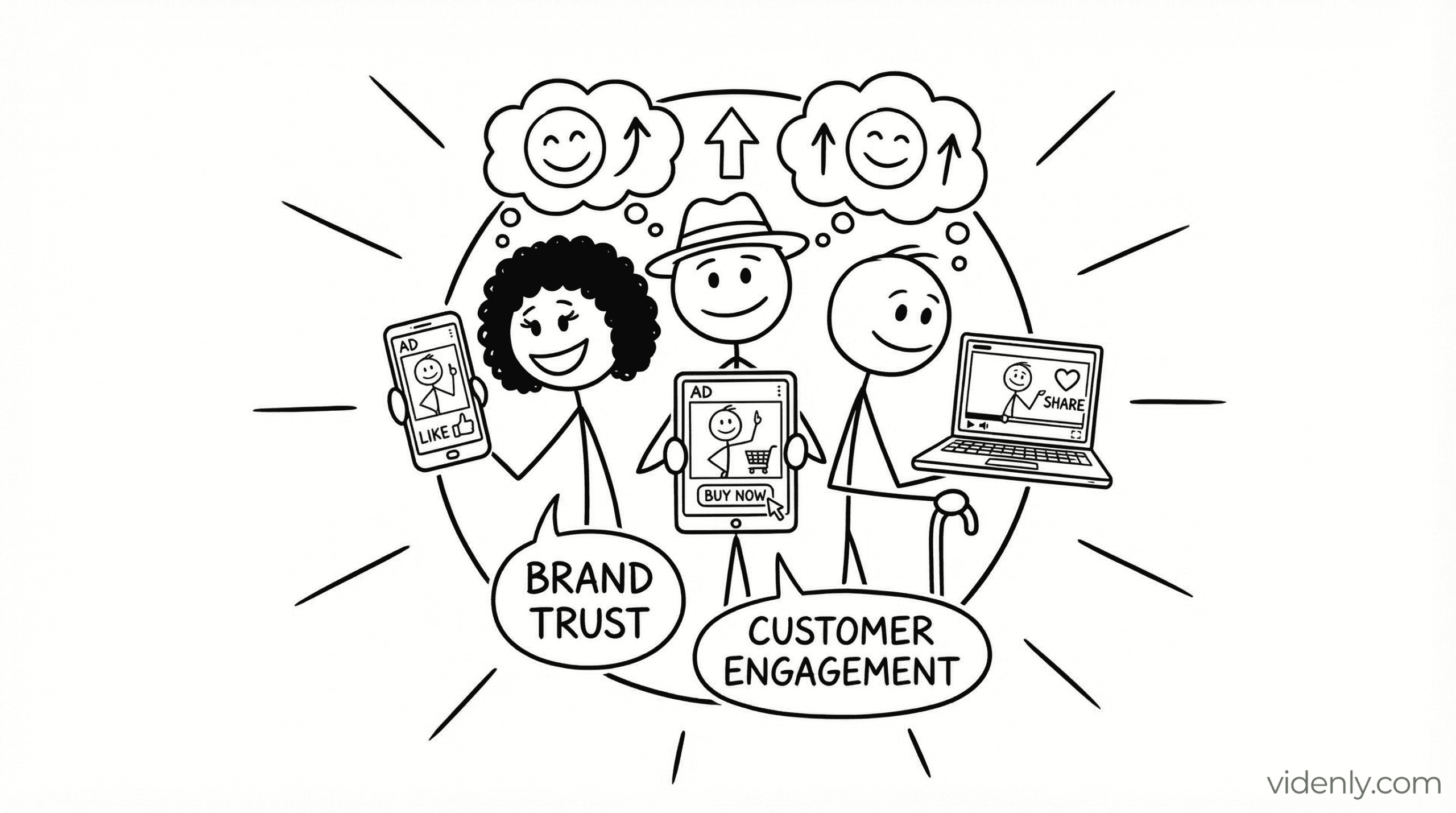
When people see others using and loving your product, it fosters a feeling of belonging, as if they are part of something bigger.
Imagine walking into a cozy café where everyone is chatting and laughing together.
That’s the kind of atmosphere UGC creates around your brand,one where customers feel included and valued.
Trust is another significant advantage of UGC ads that can’t be overlooked.
Studies have shown that people are more likely to trust content created by their peers over traditional advertisements, making UGC a powerful tool for building credibility.
When existing customers share their positive experiences, it serves as a form of social proof.
This kind of authentic endorsement can be far more persuasive than any polished marketing campaign.
Your brand can also benefit from increased engagement through UGC ads.
When customers contribute content, it not only gives them a voice but also encourages interaction across various platforms.
High engagement can lead to increased visibility and brand recall.
This means more shares, likes, and comments, which ultimately expands your reach and maximizes your marketing efforts.
It’s worth noting that UGC ads are generally less expensive to produce than traditional advertising.
Since the content comes from your customers, you can save money on photography, videography, and even on concepts.
Furthermore, UGC can add a level of diversity to your marketing strategy that is often hard to achieve through corporate-produced content.
The unique perspectives and varied styles that come from real customers can create a richer tapestry of representation.
To illustrate the multiple benefits of UGC ads, consider the following key points.
These aspects can help your brand shine in a crowded marketplace:
Additionally, UGC ads allow brands to highlight a variety of user experiences.
This showcases different ways to use or benefit from a product, thus prompting others to think about their own potential interactions.
When customers see diverse individuals enjoying the same product, it opens up an entire world of possibilities.
This can lead to potential buyers imagining themselves as part of that experience, further driving their interest.
In the end, leveraging UGC ads can create a dynamic marketing strategy that makes your audience feel invested in your brand’s story.
It’s not just about selling a product; it’s about cultivating relationships that turn customers into vocal advocates.
In the end, the integration of user-generated content into your advertising efforts isn’t just a passing trend; it’s a significant step in adapting to the evolving landscape of consumer behavior.
As we navigate this digital age, brands that actively engage with their customers will stand out in new and innovative ways.
When you’re diving into the world of User Generated Content, or UGC, understanding its effectiveness can feel like reading a complex map without a compass.
However, by focusing on a few key metrics, you can actually navigate your company’s UGC landscape with greater confidence.
First and foremost, it’s critical to track engagement metrics.

This includes likes, comments, shares, and all those little interactions that show how your audience is responding to UGC.
Next, consider measuring reach and impressions.
This tells you how many people saw your UGC and allows you to understand if your content is reaching a broad audience or if it’s a bit more niche.
Don’t underestimate the power of conversion rates.
This metric reveals how well your UGC is driving actions, whether it be purchases, sign-ups, or downloads.
Keeping a close eye on these rates helps reveal whether the content translates to tangible results for your brand.
Another important step is analyzing website traffic.
Tools like Google Analytics can display the number of visitors generated specifically from UGC campaigns, helping you identify what works best.
Watching where your traffic is coming from can offer insight into effective platforms for your audience.
It’s also worth considering customer feedback.
Did your audience share positive comments about their purchases or even the UGC itself?
This qualitative data can be incredibly revealing, like a treasure map that uncovers areas of your brand that resonate with customers.
One method that some brands find effective is to create surveys.
Asking customers directly what they think about the UGC can provide invaluable insights.
These surveys can be short and sweet but provide a wealth of information that numbers alone may not reveal.
You’ll want to dive into sentiment analysis as well.
Sentiment analysis examines the feelings behind the comments and interactions your UGC generates.
Analyzing whether the feedback is positive, negative, or neutral can give you direction on areas that require attention.
Another handy tool is social listening.
By monitoring conversations across social media platforms, you can gain insight into how the audience perceives your content.
This broader perspective can highlight trends and emerging topics that relate back to your brand.
Consider also the lifetime value of customers engaged with UGC.
Tracking how UGC influences long-term buyer behavior will show its potential as an ongoing marketing strategy.
You’ll get to see whether UGC creates loyal customers or occasional buyers.
Finally, don’t forget the importance of tracking your brand mentions.
Evaluating how often your brand appears in conjunction with UGC can indicate how effectively your audience is engaging with it.
Think of it as listening to the whispers of your audience and understanding how they are perceiving your brand through the lens of their own experiences.
Part of measuring effectiveness involves comparing against past content.
Use previous metrics from other campaigns as a benchmark to help identify growth or declines.
This comparative approach can provide clarity and direction for future UGC efforts.
In wrapping up your analysis, remember to incorporate ROI calculation into your process.
Calculating the return on investment of your UGC campaigns allows you to assess the overall value it brings to your marketing strategy.
Keeping track of expenditures versus gains can give you a clearer picture of UGC’s financial impact.
Pro Tip: Measuring UGC effectiveness requires a blend of quantitative metrics, such as engagement rates and conversion rates, alongside qualitative insights like customer feedback and sentiment analysis to fully understand its impact on your brand.
At the end of the day, measuring UGC effectiveness requires a blend of quantitative and qualitative approaches.
By combining these metrics together, you can enrich your understanding and truly grasp how UGC is influencing your brand’s customer journey.
User-generated content is a powerful tool that can significantly enhance a brand’s customer journey.
It fosters trust and authenticity, elements that consumers increasingly seek in their interactions with brands.
By encouraging quality UGC, businesses can cultivate a loyal community that resonates with their values and products.
Leveraging the right platforms for UGC can amplify reach and engagement over time.
Encouraging customer participation not only enriches the brand experience but also nurtures relationships that lead to repeat business.
The benefits of UGC ads extend beyond simple marketing; they elevate the overall consumer experience by incorporating genuine voices into the brand narrative.
In the end, measuring the effectiveness of UGC allows brands to refine their strategies and achieve lasting impact.
Harnessing the power of UGC can transform the way customers perceive and interact with your brand.
Create stunning AI-generated videos that captivate your audience and elevate your brand.