
Published on May 21, 2026 by

Faceless AI videos can create personalized experiences by analyzing customer data and tailoring content to individual preferences and behaviors.
This level of customization enhances engagement, fostering a stronger emotional connection between the brand and its customers.
Additionally, these videos can be used to provide consistent and informative communication about products and services, which helps build customer trust.
By offering 24/7 customer support through AI-generated video content, businesses can significantly improve customer satisfaction and retention rates.
Faceless AI videos can also be quickly adapted for marketing campaigns, ensuring content remains relevant and timely, further reinforcing brand loyalty.
Finally, by incorporating user-generated content and testimonials in AI videos, companies can create a community feel that encourages repeat business.
There are additional aspects that enhance the effectiveness of faceless AI videos in building customer loyalty.
In the upcoming sections, I will explore how these videos can also improve customer satisfaction through efficient communication strategies and real-time feedback mechanisms.
Moreover, I will discuss the role of data analytics in customizing video content to better align with customer preferences and behaviors.
Understanding these topics will provide a comprehensive view of how faceless AI videos can significantly impact customer loyalty in various ways.
In today’s rapidly evolving digital landscape, utilizing personalized customer engagement strategies is essential for fostering customer loyalty and satisfaction.
The emergence of faceless AI videos has revolutionized the way brands connect with their audience by providing tailored content that speaks directly to individual preferences.
By analyzing customer data and behavior, businesses can create highly targeted video content that resonates with their specific audience segments.
For instance, leveraging AI technology enables the customization of video messages based on customer demographics, such as age, location, and purchasing history.
Moreover, personalized video content can be used to address individual customer needs, offering solutions or product recommendations that feel incredibly relevant.
This kind of personalized engagement cultivates a stronger emotional connection between the customer and the brand, leading to increased loyalty over time.
When brands utilize personalized videos, they can create unique experiences that make customers feel valued and understood.
Additionally, integrating data-driven insights into video messaging can significantly enhance the effectiveness of the communication.
By understanding what types of content resonate best with different audiences, companies can produce more engaging videos that lead to higher interaction rates.
Here are several key elements that contribute to effective personalized customer engagement strategies:
Incorporating these elements into a video marketing strategy not only boosts customer satisfaction but also fosters a community around the brand.
Furthermore, leveraging AI-driven personalization opens doors for innovative forms of storytelling that can captivate an audience’s attention.
Brands can employ narrative techniques that reflect the unique experiences of their customers, making the content feel authentic and relatable.

Through this approach, customers do not merely become passive recipients of marketing but instead become active participants in the brand narrative.
This transformation helps solidify a sense of loyalty as customers are more likely to stick with brands that resonate with their personal values and experiences.
To sum it all up, harnessing the power of personalized customer engagement strategies through faceless AI videos can significantly enhance the customer journey.
By focusing on creating tailored experiences, brands are not only meeting the demands of modern consumers but also laying the groundwork for lasting loyalty.
Interactive AI video experiences are fundamentally transforming the way businesses communicate with customers, setting a new standard for engagement in an increasingly digital landscape.
By leveraging cutting-edge technology, brands can create immersive video content that allows customers to interact directly with the material, enhancing their overall experience.
This interaction fosters a deeper connection between the brand and the customer, which is crucial for building long-lasting loyalty.
One of the most effective forms of interactive video is the use of personalized content, where the messaging can be tailored to suit individual customer preferences and behaviors.
For instance, an online retailer may utilize data analytics to determine which products a customer has previously viewed and create video content highlighting those items, incorporating recommendations and user-generated feedback.
This level of personalization not only makes the customer feel valued but also encourages them to explore further, leading to increased sales potential and brand affinity.
Furthermore, incorporating polls or quizzes within the video allows customers to engage actively, transforming passive viewers into active participants who feel more invested in the content.
As customers provide feedback through these interactive elements, brands can adapt their marketing strategies in real time, thus aligning more closely with customer interests and demands.
This ability to react dynamically to customer input helps in creating a more responsive brand image, ultimately enhancing customer satisfaction and retention.
Moreover, introducing gamification elements within interactive videos offers another avenue for engagement, where customers can earn rewards or unlock benefits through participation.
A good example would be, a brand could create an interactive quiz integrated with their video tutorial, where customers earn points for completing tasks or answering questions correctly, thus increasing their motivation to engage with the content.
This not only cultivates customer loyalty but also transforms the experience into an enjoyable, rewarding journey.
Additionally, leveraging artificial intelligence within these videos allows for real-time feedback and further personalization, as AI can analyze user engagement patterns and adjust content accordingly.
This level of nuance in communication not only meets customer expectations but often exceeds them, positioning brands as innovative leaders in customer experience and relationship building.
Furthermore, such dynamic interactions can facilitate a unique storytelling approach, allowing brands to convey their histories and values in a manner that resonates deeply with the audience.
As customers navigate through stories alongside interactive content, they become emotionally invested, enhancing their likelihood to remain loyal as they feel a personal connection to the brand’s journey.
Overall, the integration of interactive AI video experiences offers brands a multifaceted strategy to enhance customer interaction, drive loyalty, and achieve sustainable growth in a competitive marketplace.
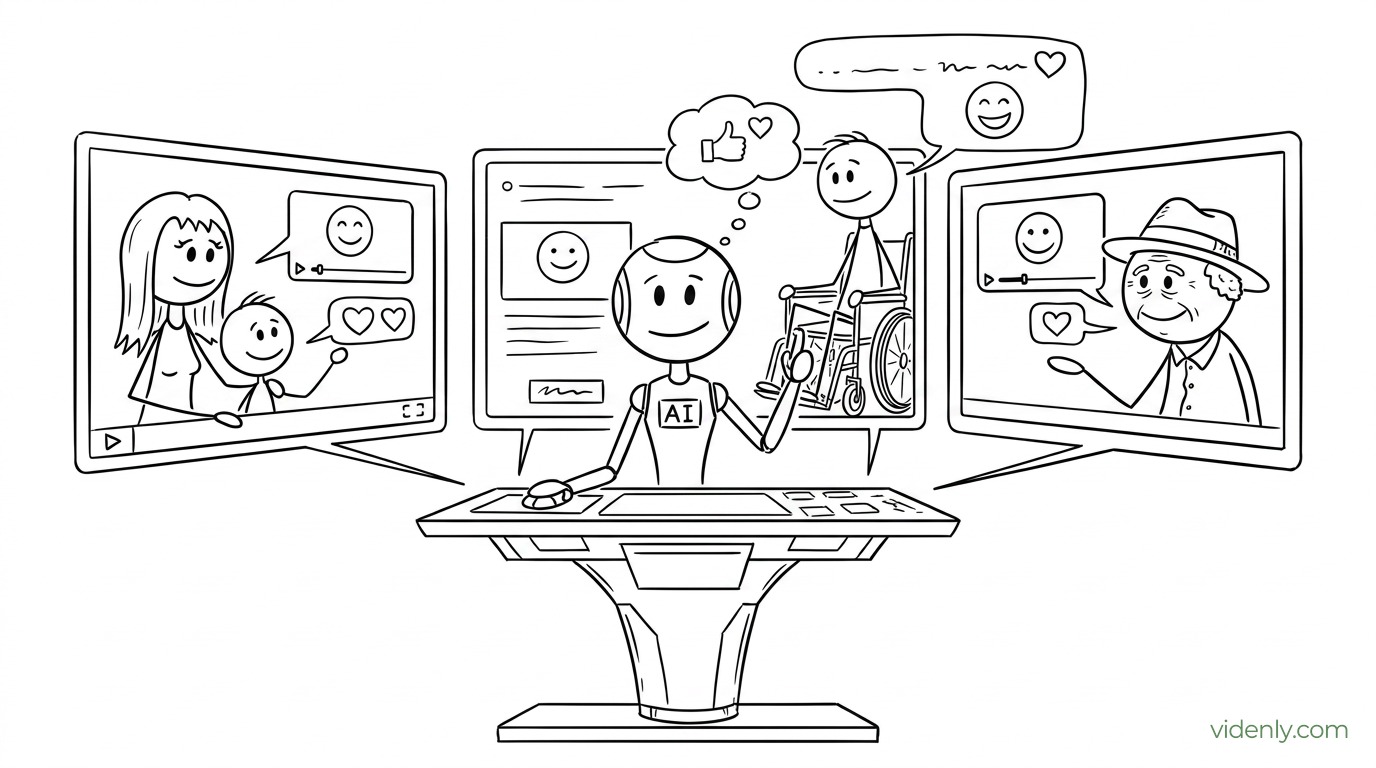
The demand for instant and effective customer support has never been higher, and organizations are constantly seeking innovative solutions to meet these expectations.
With the advent of faceless AI video technology, businesses can now offer round-the-clock support that is both engaging and informative.
Utilizing AI-powered video interactions allows companies to respond to customer inquiries all day and night, giving customers the freedom to seek help whenever they need it.
This approach not only enhances flexibility for customers but also ensures that they do not have to wait for long periods or during non-business hours to get answers to their questions.
One of the primary benefits of video-based support is its ability to provide more detail than traditional text or voice interactions.
Through a combination of visuals, animations, and verbal explanations, complicated concepts can be made much clearer, ensuring that customers feel more confident in their understanding of a product or service.
Moreover, deploying video support solutions enables organizations to address multiple inquiries simultaneously, which can significantly reduce operational costs associated with traditional customer service methods.
Businesses can strategically enhance their customer engagement by implementing the following key strategies in their video support systems:
Furthermore, the user experience can be greatly improved by making video support accessible across multiple platforms, including websites and mobile apps.
By ensuring that customers can engage with video support easily from any device, businesses demonstrate their commitment to customer satisfaction, which fosters loyalty and trust.
Another essential aspect is that the use of video support helps to establish a more empathetic connection between the brand and its audience.

Seeing a friendly, animated character or engaging AI persona can evoke feelings of warmth and support, which can often feel lacking in traditional impersonal communication methods.
In addition, by leveraging data and AI technology effectively, organizations can create content that resonates with customers’ experiences, leading to a more genuine supportive interaction.
Pro Tip: Implementing video support solutions enables organizations to provide personalized, real-time assistance and training, significantly improving customer engagement and satisfaction while reducing operational costs.
Finally, the integration of video support allows feedback mechanisms to be built seamlessly into the interactions, enabling customers to share their thoughts instantly.
This feedback loop not only guides the improvement of the service but also makes customers feel valued and heard, which is crucial in promoting long-term loyalty.
Effective brand storytelling forms the cornerstone of customer engagement and loyalty, seamlessly intertwining with the emotional experiences that customers seek.
In employing faceless AI videos, brands can craft compelling narratives that resonate deeply with their audiences, transforming the mundane into the extraordinary.
The beauty of utilizing animated characters or engaging visuals is their ability to embody the brand’s voice without the distraction of human presence.
This approach allows for a more universal appeal, ensuring that the essence of the story is communicated clearly across diverse demographics, regardless of cultural context.
Moreover, the flexibility of AI-generated content enables brands to tell stories from multiple perspectives, helping customers feel more connected to the narratives being shared.
For instance, a brand can portray the journey of its product, illustrating not just the features but the profound impact it has on users’ lives through emotive storytelling techniques.
This narrative style transforms traditional advertising into a conversation, allowing the audience to not only witness but also participate in the unfolding story.
By utilizing data-driven insights, brands can tailor their storytelling approaches to meet the specific interests and emotional triggers of their target market, further enhancing the overall engagement level.
Another significant advantage of faceless AI videos is the opportunity to create a distinct brand identity that remains consistent and recognizable across various storytelling formats.
Whether through a heartwarming narrative that highlights customer success or a humorous series of skits that showcase product benefits, this uniformity helps reinforce brand recognition and trust.
To amplify customer loyalty, brands can explore the concept of interactive storytelling, which invites customers to influence the direction of the story or engage with the content in meaningful ways.
These elements not only enhance the customer experience but also fortify the emotional bond between the brand and its audience, as customers feel a participatory role.
Furthermore, the integration of visual storytelling with compelling narratives allows brands to communicate complex information in a more digestible and memorable manner, appealing to both visual and auditory learners.
Additionally, utilizing AI-driven analytics to assess customer responses to various narrative styles empowers brands to continuously refine their storytelling approach, making it more impactful over time.
Through this iterative process, brands can focus on enhancing the emotional resonance of their stories, which ultimately fosters stronger connections with their audience.
By investing in enhanced storytelling techniques through faceless AI videos, brands can cultivate a community of loyal customers who not only purchase but also advocate for the brand, sharing its story with others.

The evolution of customer engagement has led many businesses to prioritize feedback-driven strategies, particularly when it comes to content creation.
By implementing feedback-driven video content creation, companies can ensure that their videos are directly aligned with the desires and preferences of their target audience.
This process typically involves gathering customer insights through various channels, such as surveys, social media feedback, and direct communication.
Once this information is collected, brands can harness it to tailor video content that resonates profoundly with viewers and encourages a stronger emotional connection.
One effective method of incorporating customer feedback is integrating reaction videos into a brand’s promotional strategy.
These videos, showcasing real customers engaging with a product or service, can offer authenticity that scripted marketing materials often lack.
The incorporation of such user-generated content not only solidifies trust but also makes customers feel that their opinions matter and are valued.
Moreover, brands should develop a structured feedback loop where audience input continuously informs and improves future video projects.
Below are some critical aspects to consider for successful feedback-driven video creation:
By actively seeking out and implementing this feedback, brands can create a sense of community around their content, fostering customer loyalty.
Moreover, this approach can drive customer engagement as viewers are more likely to share content that they feel aligns with their preferences and thoughts.
As customers see their feedback manifested in the content, their emotional investment in the brand increases, contributing to a stronger long-term relationship.

In essence, feedback-driven video content creation serves not just as a marketing strategy, but as a important aspect of building a sustainable brand recognition.
Platforms like Videnly can play a significant role in streamlining this process by enabling brands to create compelling videos efficiently while integrating customer insights in real-time.
Pro Tip: Implement a structured feedback loop where audience insights continuously inform and enhance your video content creation to strengthen customer engagement and loyalty.
As the market evolves, remaining attuned to customer feedback will not only enhance video content but solidify a brand’s reputation as an active listener committed to meeting consumer needs.
At the end of the day, companies that prioritize feedback will likely gain a competitive edge, setting themselves apart through their ability to adapt and innovate.
In today’s dynamic market landscape, businesses are seeking ways to retain and engage their customers, and gamified loyalty programs have emerged as an exceptional strategy to achieve this goal.
By embedding interactive elements into traditional loyalty programs, brands can create a more engaging experience that encourages customers to participate actively.
These programs transform mundane customer interactions into exciting challenges, fostering a sense of community and competition among users.
One effective approach involves integrating faceless AI video technology into these gamified experiences, allowing customers to interact with the brand in an innovative way.
Using AI-generated video content, brands can present challenges, showcase rewards, and communicate program benefits, making each interaction feel personalized and engaging.
Moreover, by utilizing video content, businesses can create dynamic narratives around their loyalty programs, enhancing customer understanding and emotional connection to the brand.
For instance, a company might develop a video series featuring a faceless AI character as the brand ambassador, guiding customers through various levels of the loyalty program.
This character could present missions that customers need to complete, such as making a certain number of purchases or sharing their experiences on social media, integrating social sharing as part of the gamification process.
Incorporating video elements into the loyalty program helps in providing clear instructions and adding an entertaining dimension that can captivate users’ attention.
Additionally, the use of rewards within gamified systems can significantly enhance customer motivation; rewards could range from exclusive discounts to early access to new products.
As customers achieve milestones and unlock rewards through their actions, the satisfaction derived from these achievements reinforces their loyalty to the brand.
Another key aspect of gamified loyalty programs is the use of leaderboards that encourage friendly competition among customers.
Video content can showcase these leaderboards in an entertaining format, perhaps featuring recognized customers celebrating their accomplishments and thereby inspiring others to engage more deeply with the program.
This not only motivates participation but also enhances the community aspect of the brand, as individuals begin to feel a sense of belonging and recognition.
Furthermore, integrating customer feedback into the gamification strategy can drive continuous improvement in the offering.
Regular surveys combined with fresh AI video content can update customers on the changes made based on their insights, showcasing that the brand values their opinions.
This level of customer engagement creates a positive feedback loop wherein customers are more motivated to provide input, diminishing the potential barriers between brands and customers.
At the end of the day, by embracing gamified loyalty program integrations with faceless AI video experiences, brands can significantly enhance customer engagement, retention, and satisfaction.
In the end, leveraging such innovative strategies not only benefits the customers but also solidifies a brand’s position in a competitive marketplace as one that genuinely cares about its clientele.

The implementation of faceless AI videos offers brands an exciting way to engage with their customers on a personal level.
By harnessing personalized customer engagement strategies, companies can create meaningful connections that enhance loyalty.
Interactive video experiences provide customers with the opportunity to actively participate, making their interaction with the brand more memorable.
Offering 24/7 customer support through video not only improves accessibility but also demonstrates a commitment to customer satisfaction.
Enhanced storytelling techniques in video content allow brands to convey their values and missions in a captivating way.
When brands involve customers through feedback-driven content creation, they foster a sense of belonging and community.
Finally, integrating gamified loyalty programs with engaging video elements not only incentivizes purchases but also deepens customer engagement.
These innovative strategies show that faceless AI videos can truly revolutionize how brands connect with their customers and build lasting loyalty.
Create stunning AI-generated videos that captivate your audience and elevate your brand.