
Published on February 27, 2026 by

To enhance user experience, AI avatars should incorporate real-time speech recognition capabilities.
This feature allows users to communicate naturally, fostering a more engaging interaction.
Additionally, customizable appearances enable users to personalize avatars to reflect their preferences, creating a deeper connection.
Incorporating emotional intelligence allows avatars to respond to user emotions appropriately, enhancing empathy in interactions.
Interactive gesture recognition can also enrich experiences by enabling avatars to respond to physical cues, making conversations more dynamic.
Finally, providing context-aware responses ensures that avatars can engage meaningfully based on the conversation’s history and user background.
While the key takeaways provided an overview of essential interactive features for AI avatars, there is much more to explore in this topic.
Understanding user preferences and behavioral patterns can change the way these avatars function and engage with users.
Additionally, examining the impact of these features on user satisfaction and retention will provide deeper insights into their effectiveness.
Continuing onward, I will discuss various related aspects that are crucial for developing successful AI avatar interactions.
In the evolving landscape of technology, voice recognition has emerged as a fundamentally transformative feature, particularly in the realm of AI avatars.
This capability enables avatars to understand spoken language, allowing users to interact with them in a more natural and intuitive manner.
By utilizing advanced algorithms, voice recognition systems can accurately interpret a wide range of accents, dialects, and speech patterns.

Such an inclusive approach ensures that the technology is accessible to a diverse user base, enhancing the overall user experience.
An effective voice recognition system is essential for creating a seamless interaction between the user and the AI avatar.
The interaction should feel organic, almost akin to a conversation with a human, which significantly bolsters user engagement and satisfaction.
Moreover, incorporating a robust response capability in AI avatars allows them to react promptly and appropriately to users’ queries.
This responsiveness demonstrates the avatar’s ability to not only listen but also comprehend and reply contextually, which is crucial for maintaining a fluid dialogue.
When evaluating the importance of voice recognition, it is important to consider its application across various scenarios.
These functionalities highlight the versatility and essential nature of voice recognition within AI avatar technology.
Furthermore, the implementation of voice recognition not only refines the user’s experience but also enables the avatar to learn from interactions.
Through machine learning, the avatar can adjust its responses based on the user’s tone, mood, and preferences.
This ongoing adaptation contributes to a more rewarding experience, as the avatar becomes better suited to meet the needs of its user.
As AI technology progresses, the accuracy of voice recognition is expected to improve, leading to even more personalized interactions.
Pro Tip: Voice recognition and response capability in AI avatars facilitate natural user interactions by enabling them to understand spoken language and respond contextually, significantly enhancing user engagement and satisfaction.
Incorporating this capability into AI avatars is a game-changer, as it fosters a unique bond between users and their digital counterparts.
In the end, voice recognition and response capability not only enhances functionality but also shapes the emotional and interactive dynamics of user experiences.
The concept of personalized visual appearance customization for AI avatars has come to the forefront of user interface innovation in recent years.
This feature allows users to create a digital representation that feels authentic and reflective of their personal identity.
As a result, customization promotes a deeper emotional connection between the user and the avatar itself, enhancing the overall experience.

Users can select from an extensive range of options that include skin tones, hairstyles, clothing, and accessories, enabling unlimited creativity.
This level of customization cultivates a sense of agency, making users feel as if they have genuine control over how they present themselves.
An AI avatar that matches a user’s preferences can significantly increase engagement, as users are more likely to interact with something that resonates with their aesthetic values.
Moreover, the customization isn’t limited to just physical appearance; users can adjust facial features and expressions, ensuring that the avatar closely resembles their real-life features.
This ability to modify elements such as eye shape, nose contour, and even smile can make conversations feel much more relatable.
Furthermore, with the integration of advanced technology, AI avatars can even exhibit dynamic changes in appearance based on user preferences or situational context.
For instance, users may want to dress their avatars in formal attire for a business meeting while opting for casual clothing during relaxed interactions amongst friends, making the avatar feel more adaptive.
This adaptability not only keeps the experience engaging but also fosters a sense of realism as the avatar mirrors the user’s requirements.
In addition to physical attributes, color themes and styles can also add another layer to customization, allowing the avatar to represent personal tastes in a broader sense.
Consider the impact of these options: a user might prefer a bright, vibrant theme reflecting their energetic personality; conversely, another might opt for muted tones that match their more reserved nature.
The features enable avatars to resonate with users on an emotional level, enhancing both individual connections and social interactions.
Furthermore, the incorporation of cultural elements in customization options opens doors for more inclusive experiences, recognizing and celebrating the diverse backgrounds of users.
Pro Tip: The ability to customize an AI avatar’s appearance fosters a dynamic and engaging environment that encourages users to immerse themselves fully in interactions.
By offering cultural attire, symbols, or colors relevant to specific communities, AI avatars can create a welcoming space, allowing users to express their identity without any reservations.
At the end of the day, the freedom to customize an AI avatar’s appearance fosters a dynamic and engaging environment that encourages users to immerse themselves fully in interactions.
In the rapidly evolving landscape of technology, emotion detection and expression has become a important interactive feature for AI avatars.
Understanding the nuances of human emotions enhances the ability of avatars to connect meaningfully with users.
At its core, implementing an effective emotion detection system involves assessing a user’s facial expressions, voice intonation, and body language.

This multi-faceted approach ensures that the avatar recognizes a user’s emotional state and responds appropriately, creating a more engaging experience.
Moreover, the expression of emotions by avatars can significantly bridge the gap between human and machine interactions.
For instance, when an avatar accurately mimics a user’s emotions, it fosters a sense of empathy and understanding.
By utilizing advanced algorithms and machine learning techniques, developers are working to create more realistic emotional expressions in avatars.
These advancements allow avatars not only to display happiness or sadness but also to convey complex emotions like frustration or confusion.
To effectively implement emotion detection and expression in AI avatars, several key areas should be prioritized:
This systematic approach not only enhances engagement but also makes users feel heard and valued.
When avatars express emotions authentically, users are more likely to develop a trusting relationship with the technology.
In the end, the success of emotion detection and expression hinges on accuracy and realism in its execution.
As technology progresses, the expectation is that these capabilities will only improve, leading to even richer interactions.
As a result, users may find themselves more disposed to communicate openly with avatars that effectively express genuine emotions.
Pro Tip: Implementing an effective emotion detection system involves assessing a user’s facial expressions, voice intonation, and body language, creating a more engaging experience that enhances connection and empathy between AI avatars and users.
This emotional intelligence in AI avatars can transform mundane interactions into meaningful dialogues.
By fostering this connection, emotion detection and expression can significantly enhance the overall user experience with AI avatars.
In today’s rapidly evolving digital landscape, context-aware conversation generation is emerging as a pivotal feature for AI avatars, significantly enhancing user interactions.
This capability allows AI avatars to generate responses that are not just reactive but also thoughtfully aligned with the user’s situation and emotions.
By understanding the context in which a conversation occurs, these avatars can create more meaningful and engaging dialogues.

For instance, an AI avatar equipped with this technology can discern a user’s mood based on their previous messages or behavioral patterns.
This understanding enables the avatar to tailor its responses, offering comfort when the user feels frustrated or celebratory remarks during joyous moments.
Moreover, context-aware conversation generation can significantly enhance the relevance of each interaction, which is crucial for maintaining user interest and satisfaction.
When an AI avatar integrates knowledge from prior interactions, it can build a cohesive narrative that deepens user engagement and creates a sense of continuity.
A good example would be, if a user frequently discusses a particular hobby, the AI avatar can initiate topics related to that interest, making discussions more personalized and relevant.
This approach not only fosters a stronger connection between the user and the avatar but also encourages the user to invest in the conversation.
Furthermore, the implementation of advanced algorithms allows these avatars to interpret various contextual cues, such as the time of day, user location, or even current trends in social media.
As a result, the AI avatar can generate discourse that is not just reactive but highly anticipatory, aligning with what users might want to discuss in that specific moment.
In contexts like customer service, context-aware conversation generation can streamline interactions by identifying previous inquiries and preferences, thus reducing response times and increasing efficiency.
This capacity leads to a more satisfying experience, as users often prefer interactions that feel logical and connected to their ongoing narratives.
Moreover, by utilizing contextual data, AI avatars can recognize when users require information versus when they seek entertainment or casual interactions.
This adaptability not only enhances the avatar’s utility but also respects the user’s preferences, showcasing a level of understanding that resonates more with individuals.
In the end, the evolution of context-aware conversation generation symbolizes a significant leap toward human-like interactions with AI, fostering relationships that feel natural and intuitive.
As AI technology continues to advance, the importance of context in conversations will only become more central, transforming user experience into an increasingly personalized journey rather than a series of isolated exchanges.
In today’s globalized world, providing multi-language support is essential for any interactive feature aimed at enhancing user experience.
AI avatars that can seamlessly communicate in various languages not only broaden their appeal but also enable users from different linguistic backgrounds to engage comfortably.
The ability to understand and process multiple languages allows these avatars to connect with a diverse audience, making interactions more meaningful.

Imagine interacting with an avatar that can instantly switch languages based on your preference or even automatically translate your speech into another language, fostering real-time communication.
This kind of functionality can significantly elevate user engagement by removing language barriers that often hinder interaction in multicultural environments.
Moreover, having robust translation capabilities ensures that users receive accurate and contextually appropriate responses, which is crucial for maintaining a natural flow of conversation.
To further delve into the advantages of multi-language support, consider the following points:
These points highlight just how important multi-language support is in creating an inviting platform where users feel comfortable communicating.
Furthermore, multi-language support serves as an important asset in the realm of customer service.
AI avatars equipped with translation features are able to assist users from various backgrounds, ensuring they receive prompt and accurate assistance regardless of their primary language.
This capability not only enhances user experience but also boosts a company’s reputation as an inclusive service provider.
Another aspect worth considering is the role of cultural nuances in translation.
Effective language processing involves more than simple word translation; it requires an understanding of cultural context to avoid miscommunication or offense.
Pro Tip: Implement multi-language support in your interactive features to enhance user engagement and satisfaction by removing language barriers and fostering inclusive communication.
AI avatars capable of taking cultural subtleties into account can engage users more authentically and respectfully.
In summary, multi-language support and translation capabilities represent a foundational component of a comprehensive AI avatar experience.
One of the most significant interactive features that AI avatars should possess is real-time feedback and suggestions, which dramatically enhances user engagement during interactions.
When users interact with an AI avatar, they often seek immediate input and evaluation regarding their actions or questions, which promotes a dynamic and responsive conversation.
In a learning environment, for instance, an AI avatar could provide instantaneous feedback on the answers a user gives to quiz questions, helping to identify areas of strength and those needing improvement.
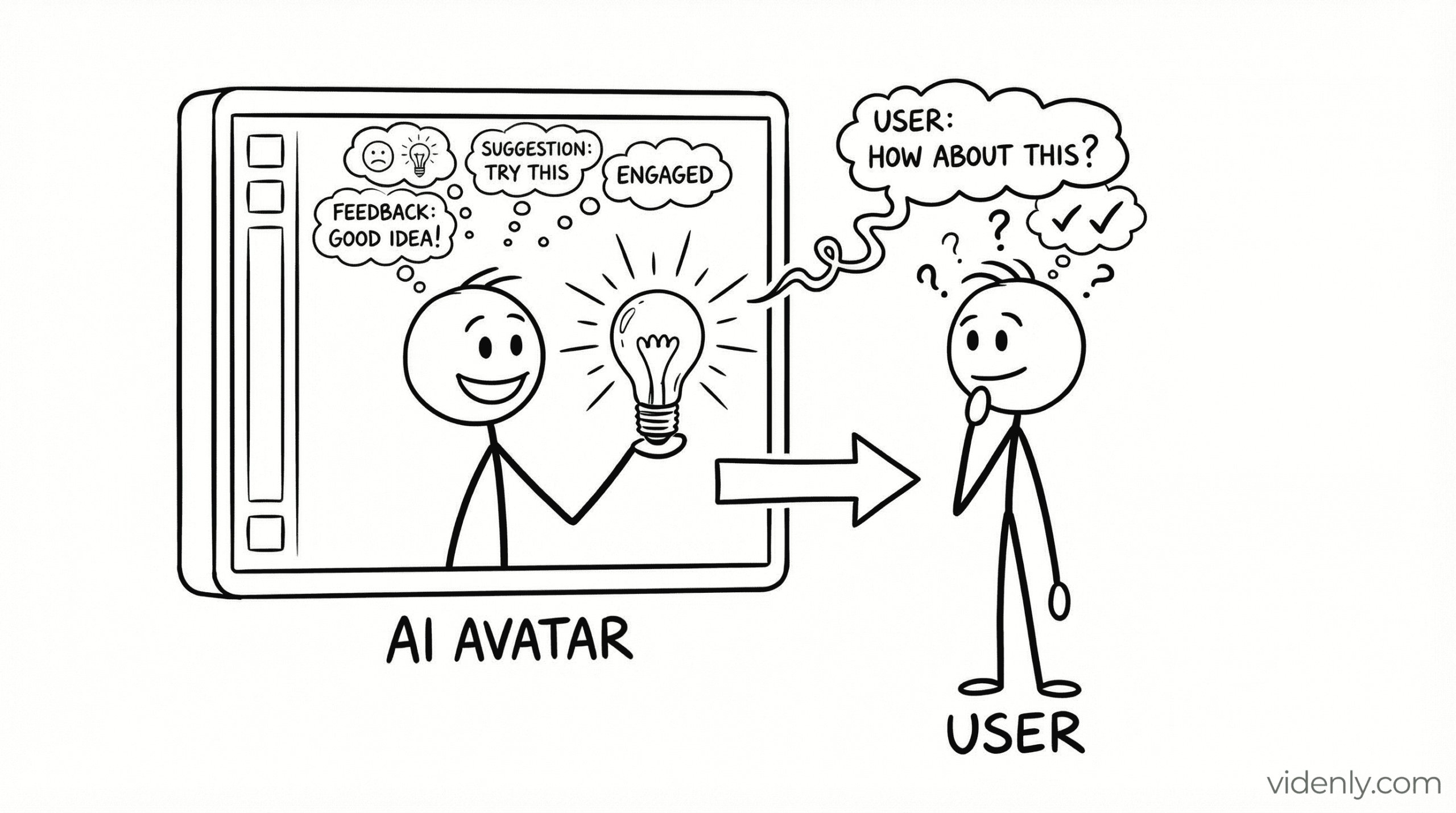
This kind of interaction not only helps in reinforcing knowledge but also boosts a user’s confidence as they receive constructive criticism in a supportive manner.
Furthermore, utilizing natural language processing allows these avatars to analyze user input and deliver personalized suggestions that are contextually relevant and pertinent to the discussion.
For instance, if a user expresses confusion about a specific topic, the AI avatar can suggest additional resources or offer alternative explanations that cater to the user’s learning style.
By integrating emotion detection capabilities, avatars can adjust their feedback based on the user’s emotional response, whether they seem frustrated, excited, or indifferent, thereby ensuring that the suggestions are more in tune with the user’s state of mind.
Additionally, the implementation of adaptive scoring systems enables an AI avatar to track user progress over time, highlighting improvements and suggesting advanced topics or more challenging questions to keep the learning process engaging.
Moreover, by allowing users to set their personal objectives, the AI can offer tailored suggestions that align with their goals, making the experience not only interactive but also highly relevant to the individual.
These personalized insights serve to guide users in a direction that maximizes their potential while simultaneously maintaining their interest in the topic at hand.
When it comes to gaming, real-time feedback can add layers of strategy and depth to the interactions users have with their AI avatars, enriching the overall experience through immersive engagement.
Dynamic suggestions during gameplay can prompt users to adopt different strategies or explore alternative pathways, which drives exploration and enhances critical thinking skills.
Providing feedback that encourages users to adopt new techniques lets them explore beyond their usual limits, consequently fostering creativity and innovation.
Furthermore, incorporating multi-modal feedback, such as visual cues, auditory signals, or even haptic responses, can create a more robust and immersive interaction environment for users.
Such modalities can inform users about their performance in a way that engages various senses, making feedback more actionable and memorable over time.
In essence, real-time feedback and suggestions do not merely serve as guides during interactions; they empower users by ensuring that they feel supported, understood, and motivated to continue learning or exploring with their AI avatar.
This multifaceted approach to delivering real-time feedback will undoubtedly lead to a more enriching user experience, marked by continuous engagement and improved outcomes in both educational and recreational contexts.
In recent years, the integration of interactive game features within AI avatars has become a significant trend, enhancing user engagement and overall experience.
These features allow users to not only interact but also immerse themselves in a gaming environment, providing a sense of fun and competition that keeps users coming back.
One of the key aspects of these game features is the ability for users to participate in various challenges or quests that are designed to test their skills and intelligence.

These challenges often require active participation, encouraging users to engage more deeply with their AI avatar while simultaneously promoting problem-solving skills and cognitive development.
Moreover, an effective system of rewards can be implemented within these games, allowing users to earn points, badges, or virtual goods as they complete challenges.
This mechanism not only motivates users to continue participating but also fosters a sense of achievement as they track their progress over time.
To diversify the gaming experience, it is essential to offer a variety of challenge types, ensuring that users remain engaged and intrigued.
This list highlights several ways in which interactive challenges can be structured to provide a comprehensive gaming experience.
Additionally, collaboration with other users during these games promotes social interaction, as users can team up to tackle challenges together.
Through cooperative gameplay, users not only build connections but also develop critical teamwork skills and learning from one another.
Furthermore, the incorporation of multiplayer features can significantly enhance the competitiveness of the game, making it more thrilling and engaging.
It’s also important for the AI avatar to adapt to the user’s skill level, offering challenges that are appropriately difficult yet achievable, thus preventing frustration.
This adaptability ensures that users remain invested in the gaming experience and feel a sense of growth as they improve their skills.
In terms of user experience, incorporating storylines into games can enrich the interactive aspect, allowing users to become part of a narrative that unfolds as they progress.
Important: The integration of interactive game features within AI avatars significantly enhances user engagement by allowing users to immerse themselves in gaming environments, participate in challenges that test their skills, and earn rewards that foster a sense of achievement.
Sophisticated AI avatars could even personalize these stories based on user preferences and choices, making the gaming experience more relevant and engaging.
In the end, the combination of these interactive game features allows AI avatars to create a dynamic and multifaceted environment that enhances user satisfaction and retention.
Create stunning AI-generated videos that captivate your audience and elevate your brand.